
Find In-Stock Ammunition Right Now Without the Guesswork
A shooter who relies on in stock ammunition never has to hesitate when the target presents itself, because the rounds they need are already locked and loaded. These cartridges are factory-sealed, uniformly charged, and ready to feed through your firearm’s action the moment you squeeze the trigger. Buying in stock ammunition means you get immediate, dependable firepower for practice or defense, eliminating the frustration of backorders and the guesswork of unknown lot quality. Secure your supply now, and turn every 5.7x28mm Ammo for Sale range session into a decisive, uninterrupted performance.
What Exactly Does “In Stock” Mean for Your Next Purchase?
When a retailer lists “in stock” for ammunition, it means the physical boxes are sitting on their shelf, not a backorder promise or a drop-ship delay. For your next purchase, this matters because your order ships within a day or two, and the price you see is locked to that specific lot. The moment you check out, that stock is deducted from their live inventory, so another shooter can’t snag your rounds. I once watched a pal hesitate over a 9mm case marked “in stock”—by morning it was gone. That phrase is your green light, not a vague estimate. Q: Does “in stock” guarantee I’ll receive the exact ammunition shown? A: Yes, if it’s in their warehouse ready to box, but confirm the grain weight and casing before specialty sports & supply paying, since some systems mix similar SKUs.
Understanding Stock Levels: From Shelves to Your Doorstep
Understanding stock levels means decoding the journey from a physical shelf to your doorstep, especially for in-stock ammunition. The retailer’s inventory count isn’t the only number that matters—you need to recognize the difference between warehouse stock, storefront inventory, and supplier drop-ship availability. A listing marked “in stock” might sit at a distributor, adding transit days before it even reaches the seller. Conversely, real-time inventory accuracy determines whether your order ships tomorrow or languishes in backorder limbo. Always verify the fulfillment location and shipping speed before checkout, because stock levels shift constantly across these tiers. This awareness prevents the frustration of a canceled order after payment.
Stock level clarity means matching the listed availability to the actual shipping source, ensuring your ammunition moves from shelf to doorstep without delay.
The Difference Between Backorder, Pre-Order, and Ready-to-Ship Rounds

Understanding the difference between backorder, pre-order, and ready-to-ship rounds prevents checkout confusion. Ready-to-ship ammunition is physically in the warehouse, so it leaves within one or two business days. A pre-order means the ammunition is still in production or hasn’t arrived at the distributor yet; your purchase reserves a round from the next incoming batch, with a lead time often listed in weeks. A backorder, by contrast, indicates the ammunition is currently sold out with no confirmed restock date; the retailer will fulfill your order once inventory is replenished, which can be unpredictable. Always check the product status—ready-to-ship rounds guarantee immediate dispatch, while pre-orders and backorders both require waiting.
Ready-to-ship rounds ship immediately, pre-orders wait for a known incoming batch, and backorders wait for an uncertain future restock.
Why Ready-to-Ship Cartridges Save You Time and Frustration
When you choose in stock ammunition labeled ready-to-ship, you bypass the agonizing wait for backorder confirmations and unpredictable restock alerts. Instead of refreshing your email or second-guessing inventory status, you secure cartridges that move immediately, meaning your range day or defensive preparedness stays on schedule. This direct availability eliminates the frustration of canceled orders and the wasted hours spent hunting alternatives across multiple retailers. A ready-to-ship cartridge purchase converts browsing into a completed transaction within minutes, protecting your momentum and guaranteeing that the exact load you need is already leaving the warehouse while you plan your next session. Simply put, you invest in certainty, not hope.
How to Match Available Rounds to Your Specific Firearm
To match available rounds to your firearm, first verify the caliber marking stamped on the barrel or slide—this is your non-negotiable anchor. When browsing in-stock ammunition, cross-reference that exact designation, including any suffixes like +P or subsonic variants, because a box labeled “.38 Special” will not safely chamber in a .357 Magnum cylinder, even if it fits physically. Your firearm’s manual is the final authority for pressure limits and bullet weight tolerances. If the store only has a heavier grain load than your usual, check the manual’s stated range; a 147gr 9mm may cycle a compact pistol designed for 115gr, but a +P load can batter older springs.
Never assume a round is correct simply because it seats in the magazine—headspace and chamber geometry decide safety, not the shelf.
When stock is thin, buy only what matches your stamped caliber exactly, and test a single box for feed reliability before stocking up.
Caliber Compatibility: Reading Your Barrel and Frame Stamps Correctly
Your firearm’s barrel and frame stamps are the definitive source for **caliber compatibility**, not the gun’s model name or the store’s shelf label. Always cross-check both stamps: the barrel typically shows the cartridge (e.g., “5.56 NATO” or “.223 Rem.”), while the frame may list the receiver’s chambering or a multi-caliber designation. A mismatch—such as a “.223” barrel inside a “5.56” frame—can change pressure tolerances, so verify each component individually before buying in stock ammunition. If stamps are worn, use calipers to measure bore diameter and case length, then confirm against manufacturer specs. Reading your barrel and frame stamps correctly prevents dangerous chamber mismatches when selecting from available rounds.
Q: What if the barrel stamp says “.300 Blackout” but the frame stamp says “5.56”?
A: That is a red flag—stop. The frame stamp may reflect the lower receiver’s original configuration, not the current barrel. Use the barrel stamp as the primary chamber reference; if it conflicts with the frame, do not fire any round until you confirm the actual installed barrel with a chamber gauge 7.62×51 Ammo for Sale or gunsmith.
Grain Weight and Bullet Type: What’s Actually on the Shelf Right Now
When scanning in-stock ammunition for your firearm, grain weight and bullet type are the first filters to apply. Common shelf loads for 9mm include 115-grain full metal jacket (FMJ) for range practice and 124-grain jacketed hollow points (JHP) for defensive carry, while 147-grain subsonic options suit suppressed pistols. For .223/5.56, you’ll typically find 55-grain FMJ for plinking and 62-grain bonded soft points for hunting. Before buying, verify your barrel’s twist rate: a 1:7 twist stabilizes heavier 77-grain match loads, whereas a 1:12 twist prefers 55-grain. Always confirm the bullet profile feeds reliably from your magazine. Practical sequence to match:
- Check your firearm’s manual for recommended grain range.
- Identify the intended use (target, defense, or hunting).
- Compare shelf stock for that grain and type, then test a small box for function.
Choosing Between Full Metal Jacket, Hollow Point, and Soft Point Loads

When you’re staring at in stock ammunition, matching the bullet type to your firearm’s purpose matters more than caliber specs. Full metal jacket rounds are your go-to for cheap range practice—they feed reliably in most semis and cause less barrel fouling, but they punch clean holes without expanding. Hollow points are the defensive pick: they mushroom on impact, dumping energy into a target and reducing over-penetration, though some barrels choke on their open noses. Soft points sit in between—great for hunting because they expand moderately while still cycling in lever-actions or tube mags. Test each load in your gun to confirm reliable 7.62x54R Ammo for Sale feeding and point-of-impact consistency, since your rifle’s twist rate or pistol’s feed ramp might prefer one style over others.
Key Features to Inspect Before Adding Ready-to-Ship Boxes to Your Cart
Before adding ready-to-ship ammunition to your cart, verify the cartridge’s exact grain weight and bullet type—mismatched loads affect point of impact. Check the box’s production lot number for consistency; mixed lots can alter velocity and pressure. Inspect the primer seal and case mouth for corrosion or dents, as visual flaws indicate poor storage. Confirm .17 WSM Ammo for Sale the round count matches the stated quantity, and review the muzzle velocity rating if you need subsonic or +P performance. Also, measure the overall length if your firearm has a tight chamber. Q: What is the fastest way to spot a bad batch? A: Examine the case head for uneven primer seating or cracked rims. Finally, scan the packaging’s stated caliber against your firearm’s barrel stamp—a simple typo in the listing is the most common costly error.

Checking the Primer and Case Condition for Reliable Ignition
Before finalizing your cart with in-stock ammunition, scrutinize the **primer and case condition for reliable ignition**. A seated, cratered, or pierced primer indicates dangerous pressure or a faulty strike, risking misfires and hangfires. The case mouth must be clean and free of splits, while the case wall should show no dents, bulges, or stress lines near the head—these compromise chamber sealing and extraction. Corroded or tarnished brass, especially green patina around the primer pocket, signals moisture damage that degrades ignition. Reject any cartridge Ammo Cans & Storage for Sale with a loose or protruding primer. Only rounds with uniform, flush-seated primers and intact, resized cases guarantee the consistent ignition cycle your firearm demands.
Understanding Lot Numbers and Headstamps for Consistency
Before you commit to in-stock ammunition, decode the lot number and headstamp to guarantee true consistency. The headstamp, stamped on the case base, tells you the manufacturer and caliber, while the lot number identifies a specific production batch. Matching lot numbers across multiple boxes ensures identical powder charges, bullet weights, and case dimensions, which directly impacts point-of-impact stability. Mixing lots can introduce subtle velocity shifts that ruin your zero. Even the same brand and load can vary slightly between batches, so scrutinize those digits carefully. Always check that the headstamp matches your firearm’s chambering, then verify the lot numbers align if you require uniform performance from your entire purchase.
Packaging Freshness: How to Spot Older or Degraded Inventory
Packaging freshness reveals how long ammunition has sat in warehouses. Check for faded ink, dusty boxes, or frayed tape, which signal older inventory. Inspect seal integrity—torn or resealed flaps indicate prior handling. Look for rust rings or powdery residue on exposed cartridge case mouths, suggesting moisture exposure. Warped or crushed cardboard loses structural protection, risking bullet setback during shipping. Examine primer pockets for green verdigris, a marker of age. Odor matters: a musty smell points to damp storage, accelerating powder degradation. Prefer boxes with crisp perforations and intact lot numbers, ensuring newer manufacture.
Q: What is the fastest way to spot degraded packaging?
A: Feel the cardboard—old stock feels limp or brittle, while fresh ammunition boxes are rigid and snap .17 HMR Ammo for Sale back when pressed.
Practical Tips for Buying Immediate-Availability Rounds in Bulk

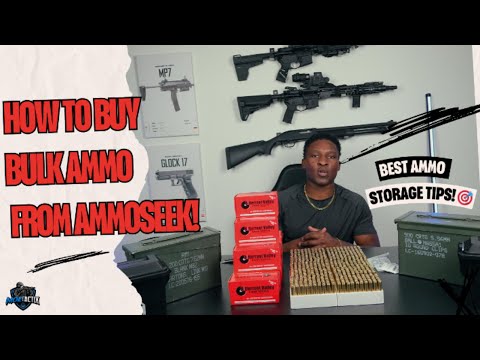
When buying in-stock ammunition in bulk, first verify the listed round count matches the box label, as some dealers sell “bulk” lots that combine open boxes with mixed headstamps. Prioritize vendors who display the manufacturing date on the product page, since older stock can suffer from corroded primers even if sealed. For immediate availability, filter search results by “in stock” and then sort by price per round—not total price—to avoid overpaying for shipping weight. Always inspect the packaging upon delivery for tears or moisture stains, and if the lot number is printed on the outer carton, photograph it for future lot-traceability, but do not break factory seals until you are ready to store the rounds. Finally, order from a single distributor if you need multiple calibers, as combined 5.56 Ammo for Sale shipping often offsets the per-round bulk discount. Confirm the seller’s return policy for damaged in-stock rounds before checkout. Rotate your bulk purchase by using the oldest headstamp first to maintain consistent pressure curves.
Calculating True Cost Per Round With Shipping and Tax Included
When buying in-stock ammunition, the advertised price per box is rarely the true figure. To calculate the real cost per round, add the flat shipping fee and any applicable sales tax to your order subtotal, then divide that combined total by the exact number of rounds in the shipment. For example, if a case costs $300, shipping is $15, and tax is $22, your total is $337. Dividing by 500 rounds yields $0.674 per round—not the $0.60 you initially saw. This calculation is essential because it reveals whether a slightly higher-priced vendor with free shipping actually offers the lower true cost per round, preventing you from overpaying on bulk purchases. Always compute this before finalizing any checkout.
How Much to Order for Range Days, Self-Defense, and Storage
For range days, a solid rule is to order triple what you think you’ll shoot—if a session burns 150 rounds, grab 450 so you’re covered for drills or a buddy’s spare mag. For self-defense, keep at least 200 rounds of your carry ammo on hand, but rotate through it yearly to ensure reliability. For storage, build toward a **minimum of 1,000 rounds per caliber** as your baseline, splitting it between sealed cans for long-term and loose boxes for weekly use. When buying in stock, prioritize quantities that fit your actual rotation, not just the best deal—bulk is useless if you can’t cycle it.
Q: How much should I order if I’m just starting out?
A: Start with 500 rounds per caliber—200 for practice, 200 for storage, and 100 for defensive loads. That covers three range trips, a loaded mag, and a spare box, without overcommitting cash.
Using a Wishlist or Stock Alert for High-Demand Calibers
For high-demand calibers like 9mm or .223, a wishlist or stock alert is your best friend—it does the refreshing for you. Set alerts on multiple reputable ammo sites, as stock drops for these rounds vanish in minutes. When an alert pings, act fast, but verify the price per round before checkout. Wishlists also help you track price history, so you’ll know if a “restock” is actually a rip-off. Ensure your account is logged in and payment details saved, so you can complete checkout in under 60 seconds. This lets you snag bulk deals the moment they appear, without constant manual refreshing. Real-time stock alerts for in stock ammunition are the only reliable way to beat the crowd.
Common Questions About Ready-to-Ship Firearm Loads, Answered
When you find an in-stock ammunition listing, the first question is usually whether the rounds are truly ready to ship today—most reputable retailers confirm this by displaying live inventory counts and processing orders within 24 hours. Another common concern is if “in stock” means factory-new or remanufactured loads; ready-to-ship firearm loads are typically virgin brass and fresh primers, verified by batch numbers on the box. Can I mix different ready-to-ship loads in one magazine? Yes, but only for practice—point-of-impact shifts between bullet weights, so zero separately for each load. Finally, buyers ask about storage age on shelf-stable ammo; in-stock loads rotate quickly, so you’re getting recently manufactured rounds, not old stock, which preserves primer sensitivity and consistent velocity.
Can I Mix Different Brands of Available Cartridges in One Session?
Mixing different brands of in stock ammunition in a single session is generally safe if all cartridges share the same caliber, bullet weight, and velocity profile. However, mixed-brand magazine loading can shift point of impact between targets because primers, case materials, and powder burn rates vary by manufacturer. For precision work, stick to one brand per box or session to maintain consistency. Ballistic uniformity matters more than brand loyalty, so check your firearm’s manual for pressure tolerances before blending.
Q: Can I mix different brands of available cartridges in one session without damaging my gun?
A: Yes, provided they are factory-new, identical caliber 7.62×39 Ammo for Sale loads and your firearm is in good condition—but expect slight group enlargement and re-zeroing after switching brands.
What Should I Do If My Preferred Load Is Currently Unavailable?
If your preferred load is unavailable, resist the urge to settle for any random cartridge. Instead, identify the closest ballistic match by bullet weight and muzzle velocity, then cross-reference that data with your firearm’s manual. A 115-grain vs. 124-grain difference may shift your point of impact, so confirm your zero before relying on it. Check if the same projectile type—like a bonded hollow point—exists in a different brand, but verify the OAL (overall length) feeds reliably in your magazine. Alternatively, buy a smaller quantity of the nearest option now to maintain your supply, while setting backorder alerts for the exact SKU. Rotate your training ammo to 7mm PRC Ammo for Sale preserve your defense rounds until restock.
How to Store Your Fresh Stock to Maintain Long-Term Performance
To keep your fresh ammunition performing like new, store it in a **climate-controlled environment** with stable temperatures between 55–75°F. Extreme heat degrades powder, while moisture invites corrosion on cases and primers. Use airtight, desiccant-lined ammo cans, and always add silica gel packs—especially if you live in humid regions. Never store rounds loose in bulk bins; friction can damage bullets and seating. Instead, keep them in original factory trays or reloading boxes. Elevate containers off concrete floors to prevent condensation wicking, and rotate your stock using a first-in, first-out system so older ammo gets used first. For long-term storage, vacuum-seal smaller batches in Mylar bags with oxygen absorbers—this halts oxidation completely.
Stable temps, sealed containers, silica gel, and elevated, rotated stock ensure your fresh rounds stay accurate and reliable for years.
